
time: 31.07.23, 19-23pm
GRUND (space): the barn
GRUND (reason): „Würzgetrob“ – Zum 1. Geburtstag (Brotfest), Welcoming
text: Byung-Chul Han: „The Disappearance of Rituals: A Topology of the Present“, 2020
group: Vanja, Jovana, Marianna, Eugenio, Ingrid, Giulia, Carina, Fabian, Jasmin, Jesse, Lisa, Brigitte
impression
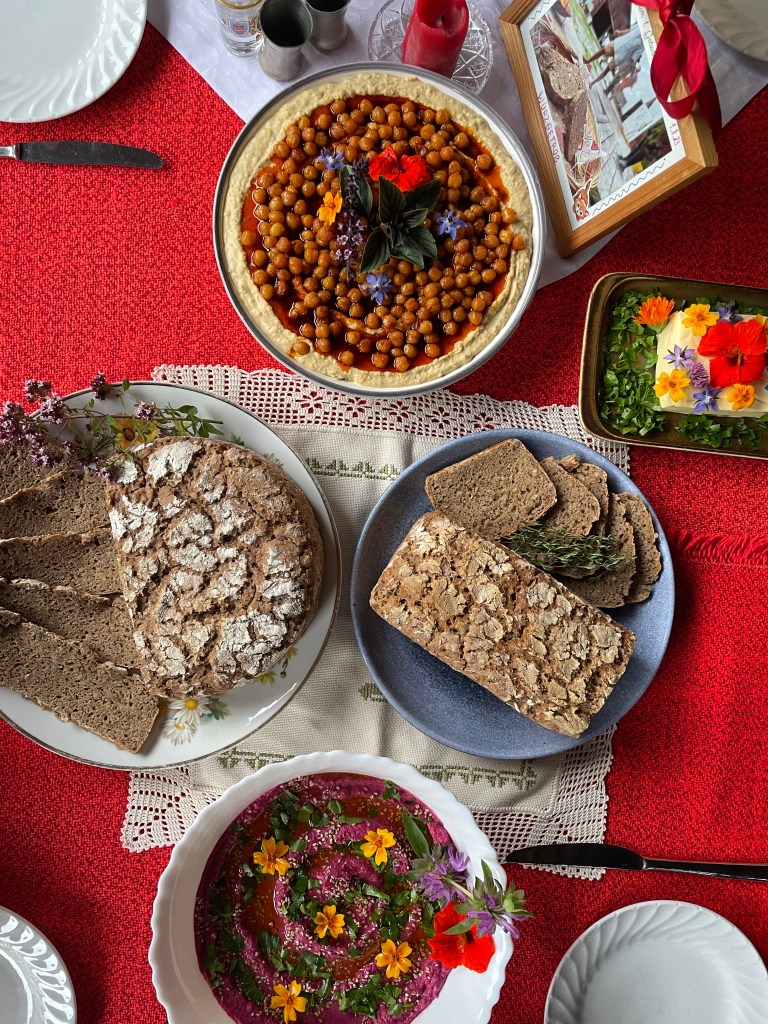
BROT : „WÜRZGETROB“
quotes
Rituals are symbolic acts. They represent, and pass on, the values and orders on which a community is based. They bring forth a community without communication; today, however, communication without community prevails. Pg. 1.
„The symbol, the tessera hospitalis, seals the alliance between the guest-friends.“
We can define rituals as symbolic techniques of making oneself at home in the world. They transform being-in-theworld into a being-at-home. They turn the world into a reliable place. They are to time what a home is to space: they render time habitable. They even make it accessible, like a house. They structure time, furnish it. Pg. 2.
If things are merely used up and consumed, there can be no lingering. And the same compulsion of production destabilizes life by undermining what is enduring in life. Pg. 3.
„Changing the world through consumption – that would be the end of the revolution.“
Under the compulsion of production, by contrast, we behave towards things, even towards the world, as consumers rather than as users. In return, they consume us. Relentless consumption surrounds us with disappearance, thus destabilizing life. Ritual practices ensure that we treat not only other people but also things in beautiful ways, that there is an affinity between us and other people as well as things. Pg. 4.
The neoliberal regime pushes serial perception, reinforces the serial habitus. It intentionally abolishes duration in order to drive more consumption. The permanent process of updating, which has now extended to all areas of life, does not permit the development of any duration or allow for any completion. The everpresent compulsion of production leads to a de-housing [Enthausung], making life more contingent, transient and unstable. But dwelling requires duration. Pg. 7.
„Perception is never at rest: it has lost the capacity to linger.“
The daily bread provides no stimuli. Stimuli quickly pale. Repetition discovers intensity in what provides no stimuli, in the unprepossessing, in the bland. The person who expects something new and exciting all the time, by contrast, overlooks what is already there. The meaning, that is, the path, can be repeated. You do not grow tired of the path. Pg. 9.
The neoliberal dispositifs of authenticity, innovation and creativity involve a permanent compulsion to seek the new, but they ultimately only produce variations of the same. The old, what once was and what allows for a fulfilling repetition, is expunged because it opposes the logic of intensification that pertains to production. Pg. 10.
questions
- what are we celebrating in our cultures – and why? why we celebrate birthdays (of people, but not of things)?
- how does name-giving change things?
- what meaning is left from sharing bread in our society?
- (how) is improvisation linked to ritualistic practices?
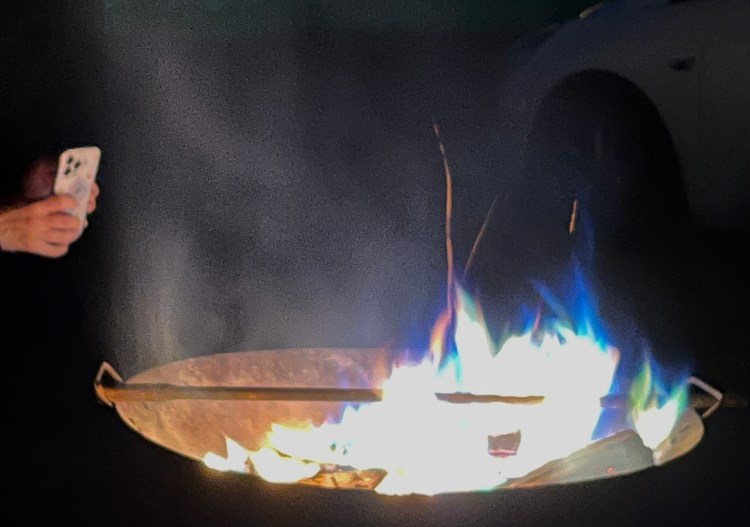
A smartphone lacks the very self-sameness that stabilizes life. It is also not a particularly enduring object. It differs from a thing like a table, which confronts me in its self-sameness. The content displayed on a smartphone, which demands our constant attention, is anything but self-same; the quick succession of bits of content displayed on a smartphone makes any lingering impossible. The restlessness inherent in the apparatus makes it a non-thing.
literature
Byung-Chul Han, The Disappearance of Rituals: A Topology of the Present, Polity Press, 2020.

 grund1535